Multi-hand blackjack and side bets: Perfect Pairs, 21+3 and more
Many online tables let you play several hands at once and offer side bets on the cards. Both change how fast money moves. This guide shows what multi-hand play does to variance and what the side bets cost.
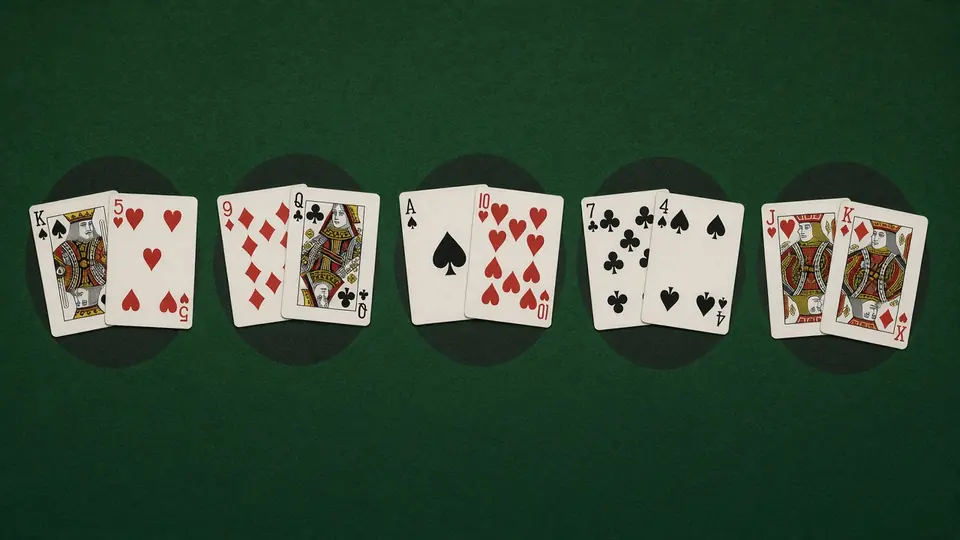
In brief
Playing more hands does not change your edge per hand, but it multiplies how much you wager per minute. Popular side bets carry house edges of roughly 2.7% to over 6%, several times the main game.
Multi-hand blackjack
At a multi-hand table you place bets on several boxes and play each hand in turn against one dealer hand. Rules and the house edge per hand are the same as single-hand play. What changes is volume.
- You wager more per round, so your expected loss per round rises in proportion.
- Hands against the same dealer card are linked. If the dealer busts, all your standing hands win. If the dealer makes a high total, they may all lose. Published analysis shows a "covariance" of about 0.48 between hands under basic strategy, meaning results are positively correlated, which makes the swings in one round larger than you would expect from independent hands.
- Playing three hands at a table that deals fast can wager in minutes what one hand takes much longer to do.
If you play multiple hands, plan your limits per round, not per hand, and set time and deposit limits first. See staying in control.
Side bets
A side bet is an extra wager on a particular event. It is settled separately from the main hand. Side bets look cheap and exciting, but the house edge is usually higher than the main game.
| Side bet | What it pays on | Published house edge |
|---|---|---|
| Perfect Pairs | Your first two cards are a pair | 4.10% (eight decks), 6.11% (six decks) |
| 21+3 | Your two cards plus the dealer's upcard form a poker-style hand | 2.74% (eight decks), 3.24% (six decks) |
| Match the Dealer (Spanish 21) | Your first two cards match the dealer's upcard | About 3.06% (six decks), 2.99% (eight decks) |
| Push 22 (Blackjack Switch) | Dealer reaches 22 | About 11.8% (six decks) |
| Insurance | Dealer has blackjack | About 7.7% (infinite deck) |
The Perfect Pairs figure is for the common pay table of 25 to 1 for a perfect pair, 12 to 1 for a coloured pair and 6 to 1 for a mixed pair. The 21+3 figure is for a pay table in which flush, straight, straight flush and three of a kind all pay 9 to 1. Pay tables differ from site to site, and a lower payout raises the house edge. Check the table's own pay table.
Why side bets feel better than they are
Side bets pay often enough to feel exciting, and the largest prizes look big next to a main-hand win. But the cost is in the long run. At 4% or more, a side bet costs several times as much per pound as the main game at a good table. Even a small side bet each hand increases your overall cost noticeably.
A sensible approach
If you play side bets, treat them as a separate form of entertainment with their own budget, not as part of your blackjack strategy. The simplest approach is to ignore them. Read the pay table first and never raise a side bet to chase a loss.
Progressive and bonus names
Game lists sometimes include games with names like Progressive Blackjack or Bonus Blackjack. These typically add a side bet or a prize pool to otherwise standard blackjack. Read how the extra feature is funded and what it costs. The main game's rules are what determine your normal odds.
Quick answers
Are side bets part of basic strategy?
No. Basic strategy covers the main hand only.
Can I play multi-hand without extra risk?
Not really. You wager more per round, and results are correlated, so swings are bigger.
Is insurance a side bet?
Yes. It is a bet on whether the dealer has blackjack. See insurance and even money.
Keep reading
 House edge explainedThe house edge is the average share of each bet the casino expects to keep over the long run.
 Insurance and even moneyWhen the dealer shows an ace, many tables offer insurance.
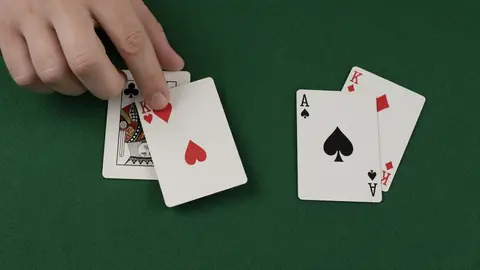 Blackjack SwitchIn Blackjack Switch you play two hands at once and may swap the top cards between them.
 Staying in controlThe only guaranteed way to avoid losing more than you can afford is to decide how much that is before you start and to make the site enforce it.