Doubling down: when to double and when not to
Doubling down means doubling your bet in return for exactly one more card. Used at the right moments, it is one of the few ways you can win more on strong starting hands. Used at the wrong moments, it simply doubles a loss.
In brief
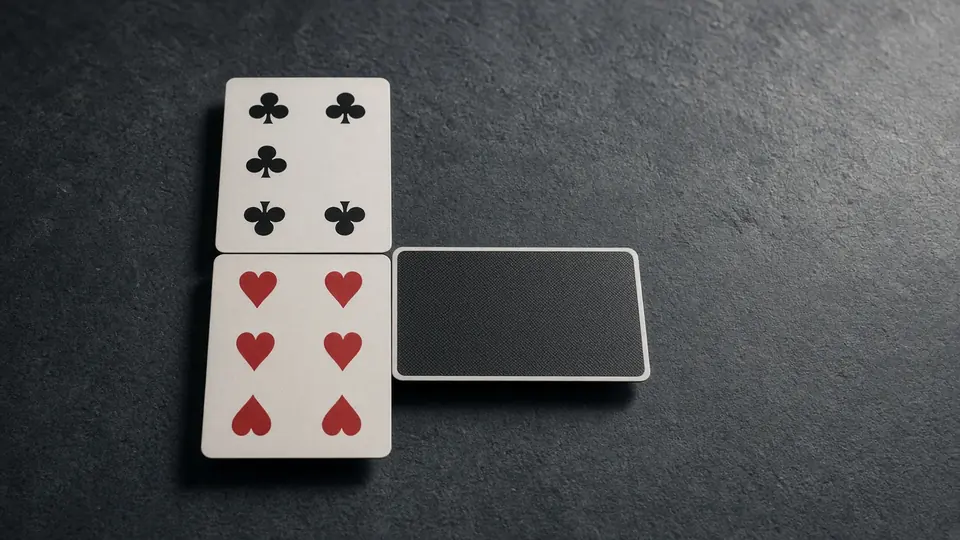
Double hard 9 against a dealer 3 to 6, hard 10 against anything except a dealer 10 or ace, and hard 11 against anything except an ace. Add soft doubles against weak dealer cards.
What doubling is
When you double down, you place a second bet equal to your first, receive one more card, and then must stand. You are taking a bigger risk because the situation favours you: you expect to end with a good total and the dealer's upcard is weak enough that the extra bet is likely to win.
The reason it works is the number of ten-value cards. Four out of every thirteen cards are worth ten. If you hold 11, a ten gives you 21. If you hold 10, a ten gives you 20. Those are strong hands, so the extra money goes in when you are most likely to be ahead.
The standard hard doubles
Using the basic strategy chart for four to eight decks, dealer standing on soft 17:
| Your hand | Double against | Otherwise |
|---|---|---|
| Hard 9 | Dealer 3 to 6 | Hit |
| Hard 10 | Dealer 2 to 9 | Hit against 10 or ace |
| Hard 11 | Dealer 2 to 10 | Hit against ace |
If the dealer hits soft 17, double hard 11 against an ace as well.
Why not 10 against a ten? A dealer ten is a strong card, and the extra bet no longer has enough advantage. Why not 9 against a 2 or 7? The dealer is either too weak to be worth the risk or too strong.
Soft doubles
Soft hands (with an ace counting as 11) can be doubled against weaker dealer cards, because you cannot bust on one card. The standard doubles are:
- Soft 13 or 14 (A,2 and A,3) against dealer 5 or 6
- Soft 15 or 16 (A,4 and A,5) against dealer 4 to 6
- Soft 17 or 18 (A,6 and A,7) against dealer 3 to 6
When doubling is not allowed on a particular hand, "Ds" in the chart means stand. See soft hands.
Pairs and doubling
Some pairs are best played as doubles. A pair of fives is not split, it is a hard 10 and is doubled against dealer 2 to 9. After a split, doubling may be allowed. If your table allows double after split (DAS), the best play changes for small pairs, as covered in splitting pairs.
Rules that change when you can double
Tables vary:
- Some allow doubling on any two cards, some only on hard 9, 10 and 11, and some only on 10 and 11. The narrower the rule, the more expensive it is for the player. In a published analysis of Double Exposure, limiting doubling to 9 to 11 cost 1.04% and limiting to 10 to 11 cost 1.44%, which shows how valuable doubling is.
- Some tables offer "double on any number of cards", as in Spanish 21.
- Some offer a double that is free of extra risk, as in Free Bet Blackjack.
What can go wrong
You only get one card. If you double on 11 and draw a 2, you hold 13 and the dealer's upcard may now make you a favourite to lose twice the usual amount. Doubling increases variance. If you have a small bankroll, make sure doubling a bet is within your limit per hand.
Common mistakes
- Doubling a hand where it looks exciting rather than where the chart says to.
- Being afraid to double 11 against a dealer 10 because "he might have 21". The chart already counts that chance.
- Doubling a soft hand against a strong dealer card.
Quick answers
Can I double after hitting?
Not normally. Doubling is only allowed on your first two cards at most tables, with exceptions such as Spanish 21.
Why double 11 but not 12?
Because a 12 can bust with one card, while an 11 can only improve.
What if I cannot afford to double?
Then you cannot double. Choose stakes that allow you to follow the strategy.
Keep reading
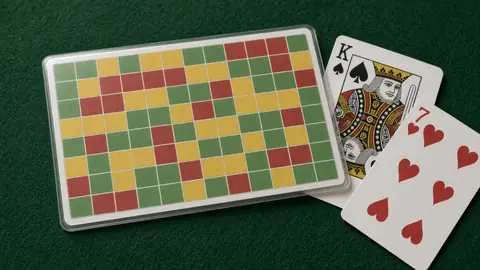 Basic strategy chartBasic strategy is the best possible play for every hand against every dealer upcard, for a given set of rules.
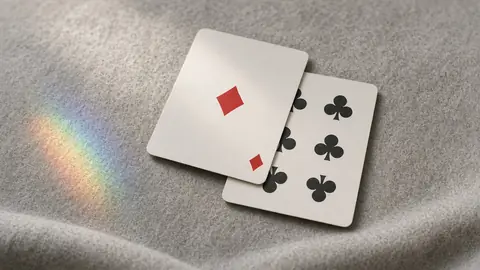 Soft handsA soft hand contains an ace counted as 11.
 Table rules and decksTwo blackjack tables can look identical and have very different odds.
 Card values and handsEvery decision in blackjack starts with knowing what your total is and whether your ace can still change.