Soft hands: playing an ace that can change
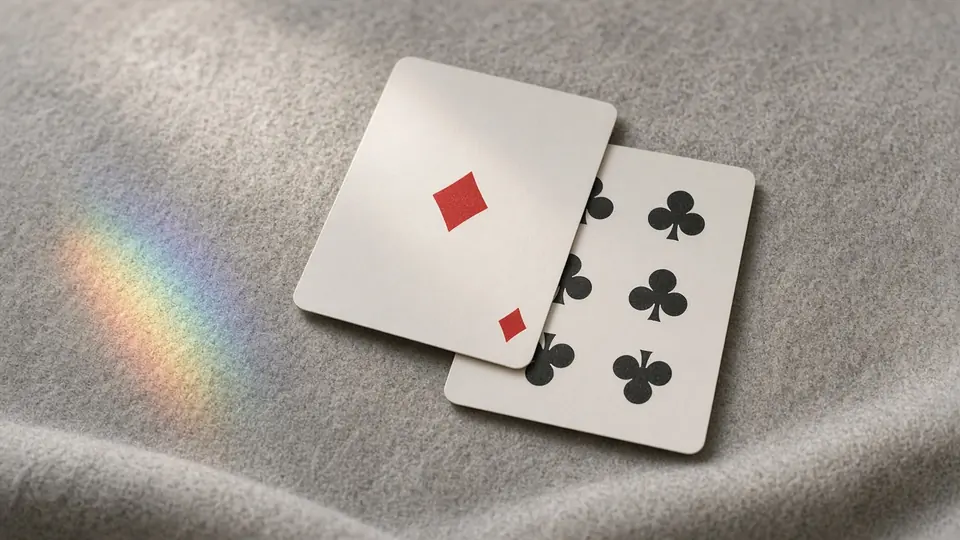
A soft hand contains an ace counted as 11. Because the ace can drop to 1, you cannot bust by taking one card, and that lets you play more aggressively than with a hard total. The rules are short, and they are among the easiest wins in basic strategy.
In brief
Always hit soft 17 or less unless doubling is correct. Stand on soft 19 or more. Soft 18 stands against 2, 7 and 8, doubles against 3 to 6 and hits against 9, 10 and ace.
Why soft hands are different
A soft hand contains an ace that is currently counted as 11. Soft 16, for example, is an ace and a 5. If you hit and get a 10, you do not bust: the ace now counts as 1 and you hold a hard 16. You cannot bust on the first card you take, so you can hit and double more freely than with a hard total.
That safety is also why soft hands are a good place to follow the chart carefully. Players often stand on soft 17 because it feels like a decent total, but it loses to nearly every dealer hand that finishes at 18 or better.
The standard play, hand by hand
For four to eight decks, dealer stands on soft 17, from the basic strategy chart:
| Hand | Play |
|---|---|
| Soft 13 or 14 (A,2 and A,3) | Double against dealer 5 or 6, otherwise hit |
| Soft 15 or 16 (A,4 and A,5) | Double against dealer 4 to 6, otherwise hit |
| Soft 17 (A,6) | Double against dealer 3 to 6, otherwise hit |
| Soft 18 (A,7) | Double against dealer 3 to 6, stand against 2, 7 and 8, hit against 9, 10 and ace |
| Soft 19 or 20 (A,8 and A,9) | Stand |
If you cannot double, "double" means hit for soft 13 to 17, and stand for soft 18 ("Ds" in the chart).
Soft 18 deserves attention
Soft 18 is the most mishandled soft total. Standing is correct against a dealer 2, 7 or 8. Against a dealer 9, 10 or ace, hitting is correct because the dealer is likely to make a hand of 19 or better and a bare 18 loses too often. Against a dealer 3 to 6, doubling is correct, because the dealer is weak and you have a chance to improve while a bust is impossible.
If the dealer hits soft 17
The strategy shifts slightly. Double soft 18 against a dealer 2 and double soft 19 against a dealer 6. Check table rules and decks to see which rule applies.
Why not stand on soft 17?
Soft 17 (A,6) wins less often than you expect. With a hard 17 you can only lose or push to a dealer's 17 to 21 hand. With a soft 17 you have extra options: you can take a card with no bust risk, and you can double if the dealer is weak. The chart tells you to hit or double with soft 17, never to stand.
Soft hands in other games
Soft totals follow the same logic in most blackjack variants, but the exact doubling rules vary. In Spanish 21, for example, there are different rules about doubling on any number of cards. Check the strategy for the variant you play.
Common mistakes
- Standing on soft 17 or soft 18 against strong dealer cards.
- Hitting soft 19 or 20, which wastes a strong hand.
- Doubling a soft hand against a dealer 7 to ace.
Quick answers
What is the difference between soft 17 and hard 17?
Hard 17 has no flexible ace and cannot be improved without busting. Soft 17 can take another card safely.
Does an ace ever stop being soft?
Yes. If drawing a card would take you over 21 with the ace at 11, it drops to 1 and the hand becomes hard.
What about two aces?
A pair of aces is a soft 12, and basic strategy says to split it.
Keep reading
 Basic strategy chartBasic strategy is the best possible play for every hand against every dealer upcard, for a given set of rules.
 Doubling downDoubling down means doubling your bet in return for exactly one more card.
 Card values and handsEvery decision in blackjack starts with knowing what your total is and whether your ace can still change.
 Splitting pairsSplitting turns one hand into two, with a second bet.